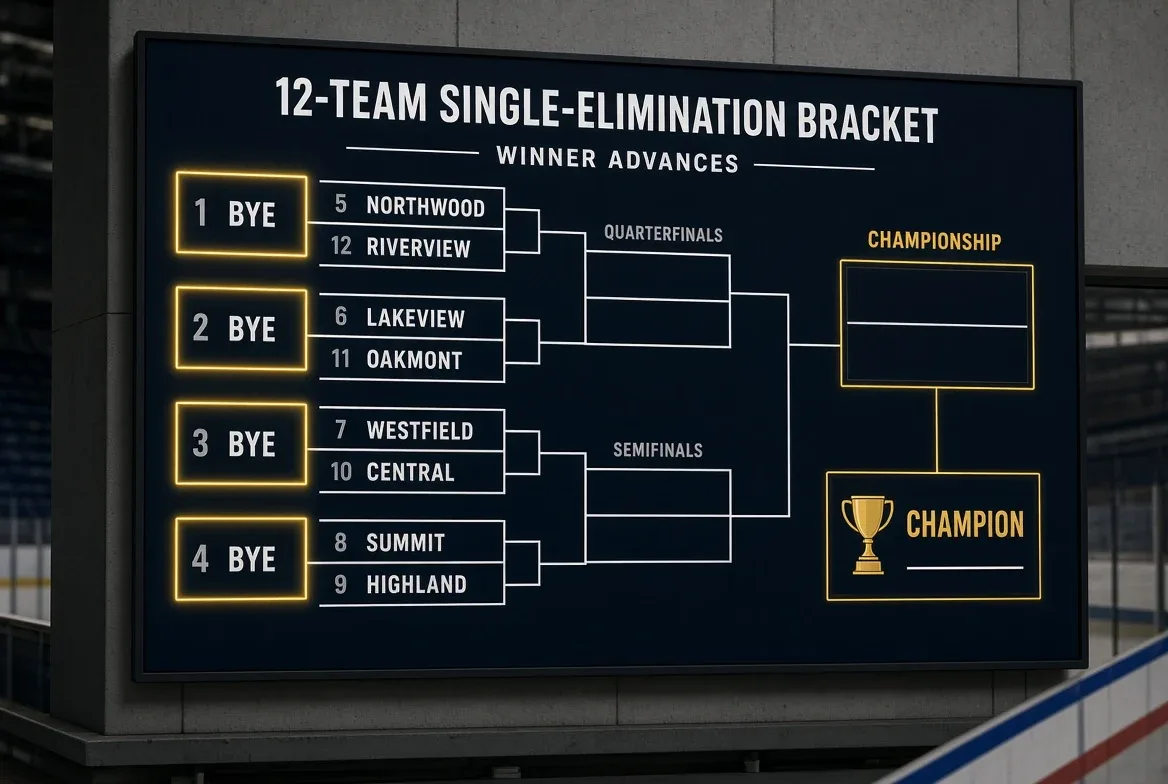
Twelve teams make the College Football Playoff each season, and getting in comes down to two separate processes: five automatic bids handed to conference champions, and seven remaining at-large spots filled by a 13-member selection committee that ranks the rest of the country using a seven-round secret ballot, according to the CFP's own protocol.
So Who Actually Gets an Automatic Bid?
Five of the twelve spots are locked in before the committee ever meets. The conference champions of the Atlantic Coast Conference, the Big Ten, the Big 12, and the Southeastern Conference all qualify automatically, along with the highest-ranked champion out of the Group of Five leagues — the American, Conference USA, the Mid-American Conference, the Mountain West, the Pac-12, and the Sun Belt — according to the CFP's official description of the 12-team format.
Notre Dame gets its own version of automatic inclusion. The Fighting Irish make the field if they finish ranked among the committee's top 12 teams, independent of any conference championship, since Notre Dame doesn't play in a conference that crowns a football champion. Everyone else — every other program in the country — is fighting the committee for whatever's left.
That five-bid guarantee is not a small distinction for a program outside the four power leagues. Win your conference outright, and the bracket door opens no matter what any computer model says about your résumé. That single rule is the whole reason a Group of Five title race matters as much as it does every fall.
Why Do Only Four Teams Get a Bye?
The four highest-ranked teams in the committee's final rankings are seeded one through four and skip the opening weekend entirely, per the format rules. That's a reward for finishing at the top of a 13-person committee's board, not simply for winning a conference.
A team can win a difficult league and still land at seed six or seven if the committee ranks three or four other teams ahead of it — which is exactly the kind of ranking fight that fuels sports-talk arguments every November. The other eight teams, seeds five through twelve, open the tournament in campus games hosted by the higher seed. Winners move on to the quarterfinals.
How Does a 13-Person Committee Actually Rank Everybody Else?
Thirteen members serve on the committee this season. Each is limited to a three-year term with no immediate reappointment, though a term can be extended by a year for someone serving as chair or for other specified reasons, according to the CFP's selection committee protocol. The management committee — not a fan vote, not a poll — picks who chairs the group.
When it's time to actually rank teams, the committee doesn't just talk it out and vote once. It runs a seven-round ballot process built around a "listing step," where members name the teams they think belong near the top, followed by a "ranking step" that uses a point system: first place is worth one point, second is worth two, and so on, with lower totals meaning a higher ranking. Add up every member's points, and the four teams with the fewest points become the top four seeds.
The committee is instructed to weigh strength of schedule, head-to-head results, and how teams fared against common opponents — explicitly without leaning on margin of victory — along with other relevant factors, such as whether a key player or coach was unavailable for a given game.
What Happens Once the Bracket Is Set?
After the first-round campus games trim the field to eight, the winners move into the quarterfinals, which are hosted at bowl games rather than campus sites. Seeds one and two get first pick of where they play, followed by seed three, and seed four is assigned whatever site is left, per the format rules.
From there, it's a standard bracket. The four quarterfinal winners play the semifinals, and the two semifinal winners meet in the national championship.
Where and When Does This Season's Field Play Out?
This year's bracket runs on a set calendar. The first round falls on December 18-19, 2026. The quarterfinals span December 30, 2026 through January 1, 2027. The semifinals land January 14-15, 2027, according to the CFP's official site.
The national championship is set for January 25, 2027, in Las Vegas — with the title game moving to New Orleans in January 2028 and to Tampa Bay in January 2029, per the same source. None of that changes the seeding math above. It just tells fans exactly when to clear the calendar.
What's the Actual Verdict on How This Works?
The whole system is built to reward two different kinds of success at once: winning your league outright, and being good enough that thirteen strangers running a point system agree you belong anyway. Most years, those two things overlap enough that nobody notices the machinery underneath.
When they don't overlap — when a one-loss league champion gets seeded behind an at-large team with a gaudier résumé, or a Group of Five champion sneaks into a bracket spot a power-conference team assumed was theirs — that's when the machinery becomes the whole story. The rules above are exactly why. That's the whole case.
For a related athletes perspective, read How MLB Salary Arbitration Actually Decides What a Player Is Worth.
For more context, read How the NFL Actually Breaks a Playoff Tie.
For more context, read Why NFL 'Voluntary' Workouts Aren't Really Voluntary At All.
For more context, read Simone Biles and the Longest Four Years in Gymnastics.