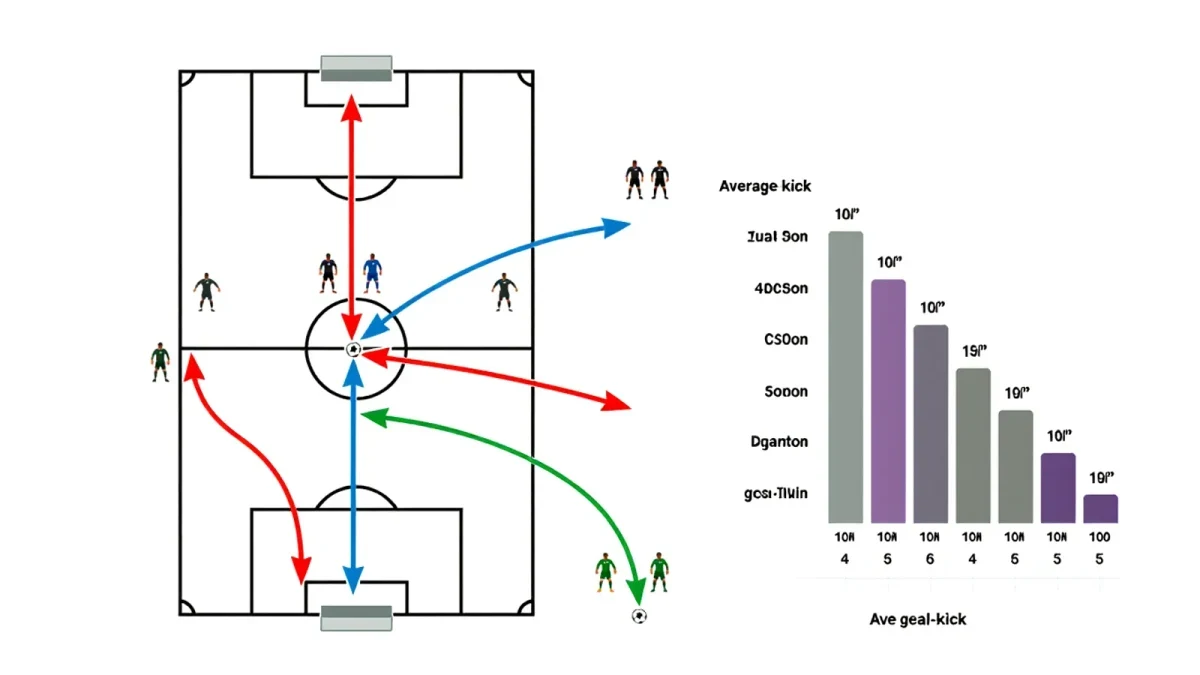
Goalkeeper distribution changed build-up play by turning the game's most disposable restart into its first attacking move. A generation ago the goal kick was a long punt toward the halfway line; now it is a designed pass that sets a team's shape, baits the press and decides where the first phase of possession happens. Opta data across the top European leagues through the 2020s shows average goal-kick length falling sharply and short goal kicks becoming the majority at elite possession clubs, a shift tracked in BBC Sport's tactical coverage as well. The consequences run through the whole team: defenders split wider, holding midfielders drop deeper, and pressing opponents must choose between chasing the keeper or conceding the ball quietly.
Where did the change come from?
Three forces converged. First, rule changes in 2019 allowed goal kicks to be played to teammates inside the penalty area, which legalised the deepest possible build-up and forced opponents to reform their pressing plans or step unnecessarily into offside complications. Second, possession-dominant coaching spread from a handful of influential clubs to the mainstream, and those philosophies treat every clearance as a failure of control. Third, a new generation of goalkeepers was recruited and trained as passers first, with academy programmes grading distribution as seriously as shot-stopping. The combined effect made the goalkeeper the eleventh outfield player in possession phases, and opponents adjusted everything from their first line of press to their rest defence, the structure kept in place while attacking, to account for a keeper now positioned twenty metres higher than before.
What does modern distribution look like?
The menu has expanded beyond the short goal kick. Keepers now break presses with clipped diagonal balls to advanced full-backs, play vertical passes between the lines to a dropping striker, and act as a free man when opponents man-mark the build-up, since the goalkeeper is the one player the press cannot mark without leaving a teammate free. Distribution has become a tactical lever rather than a safety valve.
| Distribution type | Purpose | Risk |
|---|---|---|
| Short to centre-backs | Set shape, bait the press | Turnover in own third |
| Pass to dropping midfielder | Break the first line quickly | Press on the receiver's back |
| Diagonal to advanced flank | Bypass the midfield press | Aerial duel loss |
| Long to striker channel | Direct relief and second balls | 50/50 with no control |
Good teams hold all four options live at once, because a predictable keeper is a pressable keeper. The sight of a goalkeeper shaping to play short and then clipping the ball over a stranded press has become one of the reliable rewards of modern build-up.
How did it change the players around the keeper?
Centre-backs are now selected for passing under pressure, and their widest build-up positioning, often splitting to the edge of the penalty area or beyond, exists to make the keeper's short option available. Holding midfielders learned to receive with their body opened to the whole pitch, dropping into the last line when opponents followed them. Full-backs push higher knowing the keeper can switch play instantly. Even wingers changed, holding width to occupy full-backs so the deep build-up gains time. Recruitment followed: goalkeepers who dominate in distribution command premiums, and highlight tapes of keepers now include passing maps alongside saves. Shot-stopping remains the core of the job, but the difference between a good and an elite keeper has increasingly been written in passes completed, not saves made.
What are the risks and criticisms?
Playing out from the back concentrates risk where mistakes cost most. A failed pass inside the defensive third hands the opponent a chance from close range, and analytics of high-value turnovers shows shots following defensive-third giveaways convert at rates far above average. Critics argue that some teams copy the fashion without the personnel, forcing centre-backs into pressure they cannot escape. The balanced answer is conditional aggression: play short when the press can be baited and beaten, play direct when the press is sealed, and never let ideology outrun the players executing it. The best distributing keepers are distinguished less by refusing to go long than by knowing exactly when the short option has died.
Where is distribution heading next?
The trend is deepening rather than reversing. Training technology now measures a keeper's pass accuracy under simulated pressure, clubs sign third goalkeepers capable of playing out, and youth football normalises short goal kicks from the earliest age groups. The tactical frontier is the keeper as an active press-baiter, deliberately holding the ball an extra beat to drag the opposition forward before releasing into the freed space. What began as a rule tweak and a few stubborn coaches has become a structural fact of the sport: in modern football, the attack's first pass is made with hands.
How do opponents press a distributing keeper?
Pressing a keeper who can pass forced its own tactical evolution. The naive answer, sending a striker to chase the goalkeeper, concedes numerical advantages elsewhere, because the keeper is effectively a spare passer who can release the ball into the space the chaser abandoned. Sophisticated presses instead target the receivers: a front line that man-marks the build-up players and leaves the keeper free, betting that pressure on centre-backs and the dropping midfielder will force either a long ball or a mistake from the outfield players rather than the keeper. The counter-counter is the keeper as bait, holding possession an extra beat to draw the press forward before playing into the space the commitment opened. Some teams position a forward in the passing lane between the keeper and his primary outlet, cutting the easiest release and forcing distribution toward the weaker side. This chess match has effectively created a new sub-genre of tactical analysis devoted entirely to the first six seconds of possession, with clubs scripting press plans for goal kicks separately from open-play throw-ins and goalkeeper saves. The restart nobody analysed twenty years ago now has its own dedicated weekly coaching literature, its own video tags and, at elite clubs, its own rehearsal blocks in the weekly schedule.