The World Cup 3rd place match is an official fixture between the two semifinal losers that decides who finishes third, and it matters: the winner takes a bronze medal, prize money, and a result that counts toward the Golden Boot and the FIFA World Rankings. FIFA officially calls it the bronze final, and it has been played at almost every World Cup since 1934.
It is the only match in the tournament between two eliminated teams, which is exactly why it divides opinion. Some nations treat it as a genuine achievement — Croatia celebrated on the field after beating Morocco in 2022. Others arrive deflated. Either way, the game is official, the statistics are official, and the history is longer than most readers expect.
Why does a World Cup 3rd place match exist at all?
The idea is nearly as old as the tournament. The first third-place game was held in 1934, at the second World Cup, and FIFA has kept it at every edition except two. The inaugural 1930 tournament did not declare a third-place finisher at all — FIFA later ruled that the United States finished third on overall record — and the 1950 edition used a round-robin final group rather than a bracket, so no third-place game was scheduled.
The practical reasons are straightforward. Sporting News explains that for FIFA, the game is an opportunity to sell tickets, bring in viewers and make money, and that one extra match between two prominent teams is something the organization can get away with. Losing semifinalists cannot be made to play more games in a larger sense — but one bronze final, with a medal and prize money attached, has proven durable.
What is actually at stake in the bronze final?
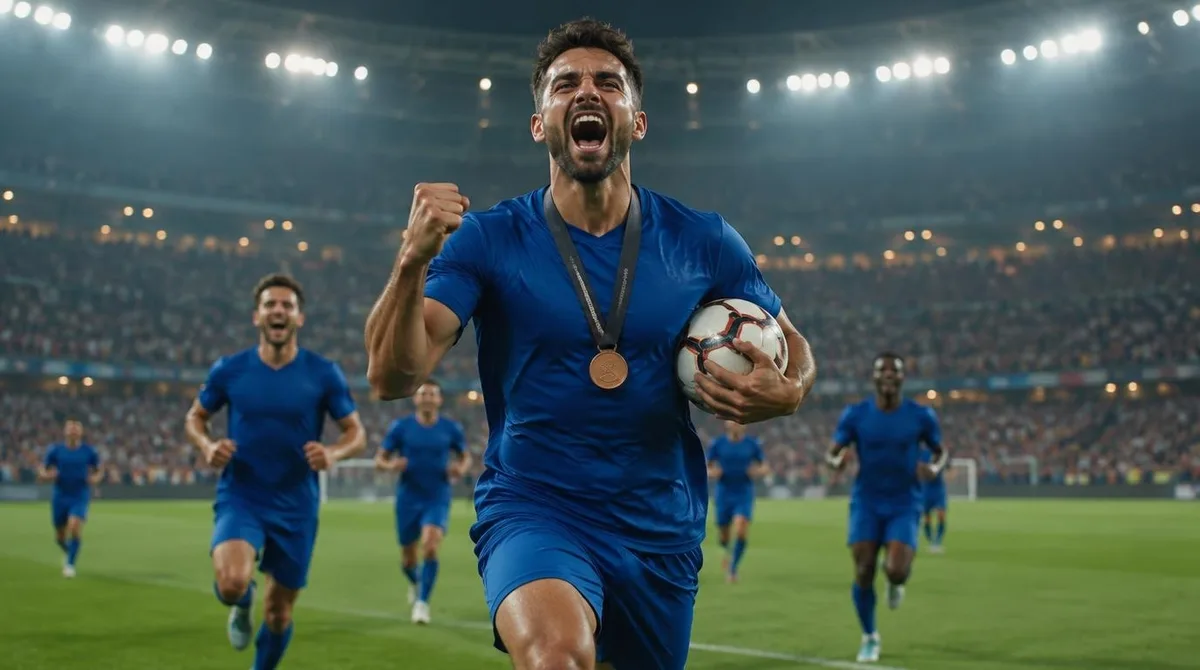
More than casual fans assume. The winner receives a bronze medal, presented on the field — as FIFA did for Croatia after its 2-1 win over Morocco in Qatar in 2022. The loser goes home with nothing, which is what gives the match its edge. For related coverage, see Soccer tactics styles explained — Possession vs. counterattacking: which styles actually win football matches. For related coverage, see Soccer tactics styles explained — Possession vs. counterattacking: which styles actually win football matches.
The financial gap is real too. According to Sporting News, the third-place winner receives $29 million in prize money compared with $27 million for the fourth-place finisher, figures it attributes to The Athletic. For context in the same reporting, the champion earns $50 million and the runner-up $33 million — closer to third place than to first.
Individual stakes matter as well. Goals and assists in the third-place game count toward the Golden Boot and all official World Cup records, because the fixture is a fully official tournament match. In 2026, that mattered at the top of the race: Kylian Mbappé entered the weekend tied with Lionel Messi at eight goals, leading on assists, three to Messi's two. Jude Bellingham and Harry Kane sat on six, Ousmane Dembélé on five. We covered a connected angle in Why zone 14 still decides football matches in 2026.
There is also the ranking effect. The result carries weight toward the FIFA World Rankings, which shape future tournament seeding. A third-place finish is, for many federations, a documented achievement worth protecting.
Who has won the World Cup 3rd place match through history?
Twenty-one editions have produced a bronze final result. Germany leads the list with three wins, while Croatia, Poland, Brazil and France have each won two, per the compiled history from NBC Miami. The full record:
| Year | Result |
|---|---|
| 1934 | Germany 3, Austria 2 |
| 1938 | Brazil 4, Sweden 2 |
| 1954 | Austria 3, Uruguay 1 |
| 1958 | France 6, West Germany 3 |
| 1962 | Chile 1, Yugoslavia 0 |
| 1966 | Portugal 2, Soviet Union 1 |
| 1970 | West Germany 1, Uruguay 0 |
| 1974 | Poland 1, Brazil 0 |
| 1978 | Brazil 2, Italy 1 |
| 1982 | Poland 3, France 2 |
| 1986 | France 4, Belgium 2 |
| 1990 | Italy 2, England 1 |
| 1994 | Sweden 4, Bulgaria 0 |
| 1998 | Croatia 2, Netherlands 1 |
| 2002 | Turkey 3, South Korea 2 |
| 2006 | Germany 3, Portugal 1 |
| 2010 | Germany 3, Uruguay 2 |
| 2014 | Netherlands 3, Brazil 0 |
| 2018 | Belgium 2, England 0 |
| 2022 | Croatia 2, Morocco 1 |
| 2026 | England 6, France 4 |
Two entries stand out. In 2014, the Netherlands beat host Brazil 3-0, a result that compounded the host nation's semifinal humiliation. And in 2026, England's 6-4 win over France became the highest-scoring third-place playoff in World Cup history and the highest-scoring World Cup game since 1982, per NBC Miami's account of the match in Miami.
Does the match retain competitive meaning, or is it an exhibition?
The honest answer is that it depends on the two teams involved, and the 2022 and 2026 editions show both sides of that. Croatia and Morocco were motivated to play for third place in 2022 — Croatia had finished second in 2018, and Morocco, the first African nation ever to reach a World Cup semifinal, had a historic result to cap. Sporting News notes Croatia celebrated on the field after winning.
The 2026 dynamic was different. France had every expectation of winning the tournament; England was minutes from the final before conceding an Argentina comeback in a 2-1 defeat, having already fallen 2-0 to Spain in the record's account of the semifinal path. Whether motivation survives that kind of collapse is the perennial question with this fixture, and no rule of thumb survives contact with it.
What the evidence does establish is that the match is not meaningless in any formal sense: an official result, ranking points, prize money, and Golden Boot implications all attach to it. The critique that it is an exhibition is really a claim about player mentality, not about the fixture's status.
What this means for how the bronze final should be read
Our analysis: treat the third-place game the way analysts treat any knockout fixture — with the context of what each side lost. A team beaten in a semifinal it was never expected to contest tends to play the bronze final as a celebration of an overachievement. A team that reached the final's doorstep and fell tends to play it flat, or occasionally — as England's 6-4 suggests in 2026 — with something to prove individually.
The number that survives a second viewing is this: only two World Cups ever lacked a third-place game, and the fixture has now produced 21 results across nearly a century. Whatever one thinks of its sporting value, it is a permanent part of the tournament's structure, and its winners — Germany three times, Croatia, Poland, Brazil and France twice each — occupy a documented place in World Cup history.
For readers who want the wider tactical context, the knockout formats behind these matches are covered in the guide to how extra time and shootouts break ties, and the broader craft sits in the site's match analysis section.