Local football clubs hold communities together because they are one of the last institutions whose job is simply to turn up every Saturday. Across England's non-league pyramid alone there are well over a thousand clubs, from county divisions upward, most of them run by volunteers on budgets smaller than a professional player's weekly wage — the English Football Association's structure counts dozens of leagues and thousands of affiliated clubs, and the National League system's lower tiers effectively run on unpaid labour. When a town loses its post office, its bank branch and its pub, the football club is frequently the last shared address left. The Associated Press and regional outlets have repeatedly profiled such clubs as de facto community centers during crises.
What do small clubs actually do beyond football?
The honest answer is: whatever the town needs. A ground is a hall with a fence around it. Non-league and lower-league clubs host food banks and blood drives, run holiday meals, shelter community groups on weekday evenings and provide meeting space that would otherwise cost money the neighborhood does not have. During the coronavirus pandemic, hundreds of clubs across Britain and Europe delivered groceries and checked on isolated residents — a mobilisation that surprised governments but not anyone who had watched a club committee meeting. A club is a pre-organised volunteer network that happens to play sport on weekends.
- A venue. The only large covered space many towns still control locally.
- A calendar. Fixtures give the year a rhythm independent of commerce.
- A roster. Committee members are practised at logistics, catering and crowd management.
- An identity. The name on the badge is the name of the place.
Why does the ground itself matter so much?
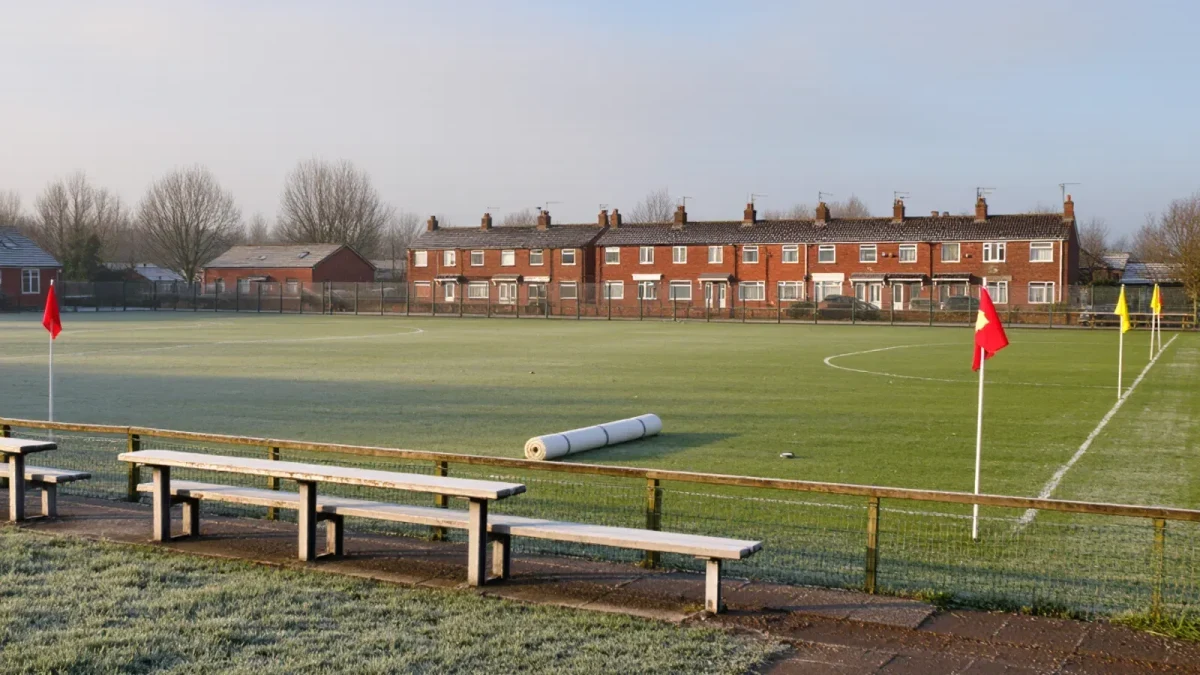
Because it is fixed geography in a mobile world. Shops rebrand, schools consolidate, factories become housing estates — the football ground stays on the same plot of land, often for a century, accumulating the town's memory in its stands. Sociologists studying community attachment consistently find that durable physical meeting places correlate with local social cohesion, and the ground is the purest case: nobody needs a reason to be there beyond belonging. Generations sit in the same seats their grandparents took, which is why proposals to move a small club out of a town routinely provoke more anger than relegation ever does.
Nobody needs a reason to be there beyond belonging. That is a rarer institutional design than it sounds.
How do clubs keep running on almost nothing?
Through layered labour that never appears on a balance sheet. A typical lower-tier club has a handful of paid staff, a committee of volunteers, a supporters' trust that raises money for specific projects, and a rotating cast of locals who paint the changing rooms before the season. Player wages at many levels are modest, part-time or expenses-only, and players often hold local jobs — meaning the team is literally drawn from the community it represents. The club's fragility is real, and club collapses into liquidation are a recurring story covered by BBC regional reporting, but the same fragility is what makes towns fight for it: everyone can see the seams, so everyone can imagine helping hold them together.
What a small club provides, by tier
| Resource | Typical form | Community function |
|---|---|---|
| Ground | Long-held local site | Meeting place, shelter, event hall |
| Fixtures | Weekly home games | Calendar and social rhythm |
| Volunteers | Committee and match-day staff | Deployable civic capacity |
| Youth setup | Local junior teams | Childcare, coaching, pathways |
| Badge | The town's name | Portable civic identity |
What happens when a club dies?
The damage is measurable in social terms even when the footballing loss seems trivial. Towns that lose clubs describe the disappearance of a weekly gathering that crossed age groups — few other institutions put teenagers, retirees and young families in the same place weekly. Researchers studying community sport have linked local club presence to volunteering rates and social trust, and heritage bodies have noted grounds functioning as informal archives of local history. The vacuum rarely gets filled by anything purpose-built; it just stays empty. This is why supporters' trusts increasingly buy stakes in struggling clubs: the purchase is not sentimentality but a recognition of what the institution does between matches.
Can that anchoring role survive modern economics?
It can, because the role was never dependent on money in the first place — it was dependent on presence. Clubs that embraced community-ownership models, charitable trusts and shared facilities have generally proved more durable than those chasing promotion beyond their means, a pattern visible across Germany's member-owned clubs and Britain's growing supporters'-trust sector. The sustainable version of a local club is modest by design: a ground in the town, a team from around the town, a bar that hosts the anniversary parties. What the professional game sells is excellence. What the local club sells is addressability — the rare guarantee that, next Saturday at three o'clock, the town has somewhere to be.
How do clubs anchor identity for people who never attend?
Through the name alone. A town whose club appears in results roundups, on teletext-era pages and now in social feeds carries its name into the wider world every Saturday, and residents carry it back. People who have not stood on a terrace in decades still correct strangers who mispronounce the club's name, still know the rough position in the table, still feel a small civic jolt at a good cup run. This is anchoring in its cheapest and most durable form: the club functions as a symbol the town can deploy — in a news headline, a joke, a pub quiz answer — to say that the place exists. Researchers into place attachment describe such symbols as identity infrastructure, and a football club is among the last identity infrastructure many small towns possess that is neither a church nor a war memorial, and considerably easier to sing about.