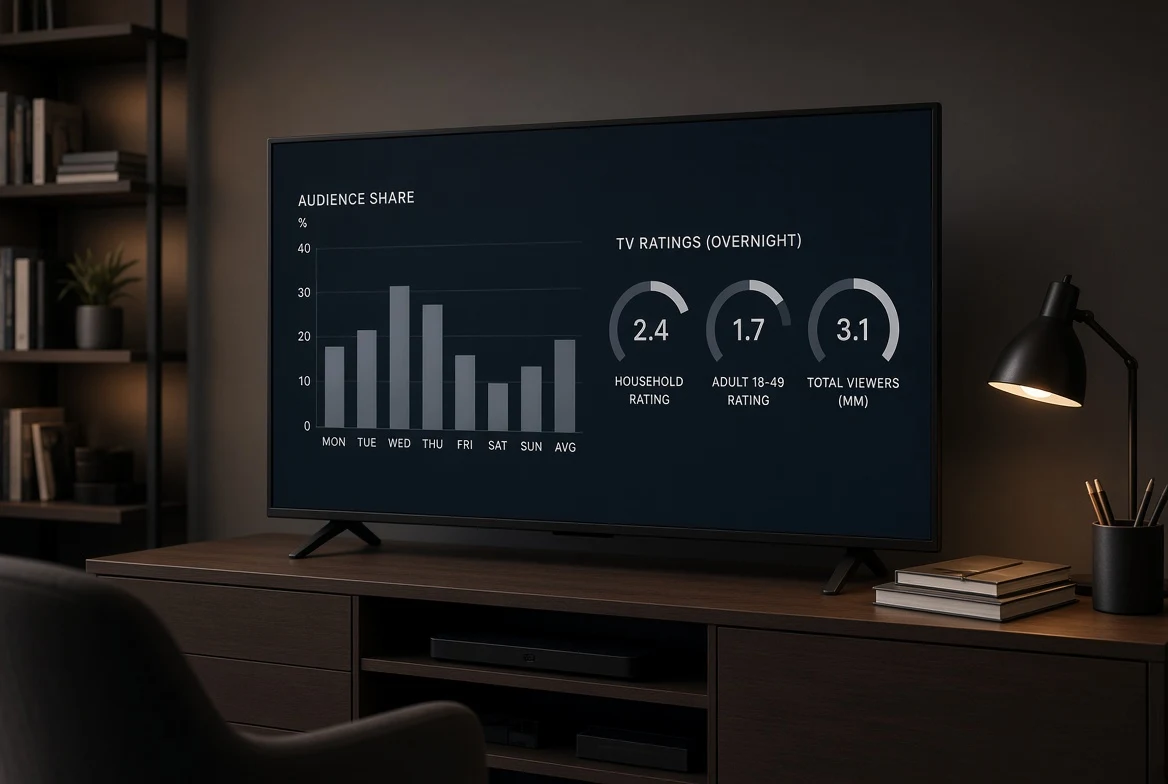
Scouting networks still employ people to watch matches because data answers only the questions it is built to answer: football's central scouting questions — how a player competes, how he treats teammates, whether his technique survives pressure he has never faced — are not currently measurable from event data alone. The scale of the data layer is enormous; providers such as Opta, and the wider analytics industry that grew from event and tracking data, supply metrics on millions of matches across world football. Yet every major club layers human scouting on top of it, and spends more on that layer than on the data. The reason is not nostalgia. It is that data and eyes fail in different places.
What does data do well in scouting?
Three things, and they have genuinely transformed recruitment. First, filtering: a scouting department can ask the data which under-21 players in a dozen leagues exceed thresholds for progressive carrying, pressing resistance or chance quality, and get a shortlist in minutes instead of months. Second, context: expected-goals frameworks and possession-adjusted measures correct raw numbers for role, team strength and league tempo. Third, breadth: no network of humans can cover second divisions on three continents; a database can.
Widely reported milestones mark the shift. The use of expected-goals models became mainstream across European analytics during the 2010s, and clubs invested heavily in data teams — including the well-documented consultancy work associated with the rise of analytics in recruitment, a movement business media has tracked extensively. None of this displaced the scout. It moved the scout up the funnel.
Where does data stop?
The blind spots are structural, not temporary.
- Off-ball action. Event data records what happened around the ball. A full-back's scanning, a striker's movement that drags a centre-back, a midfielder's blind-side run — much of what creates value is invisible to the event log, and only partly captured even by tracking data.
- Context and causation. Data shows a midfielder lost possession in his own third. It does not show that his teammate's pass arrived late, or that he was the only player offering for the ball.
- League translation. Numbers in one league do not map cleanly onto another. Humans judge whether the space, time and physicality that produced those numbers will exist at the next level.
- Character and coachability. Reaction to being substituted, behaviour in a losing dressing room, professionalism away from the ground — clubs regard these as decisive, and the dataset does not contain them.
- Novelty. A player doing something tactically unusual generates data that fits poorly into existing models, which are trained on the ordinary.
What does a live scout see that a lens does not?
Positioning, mostly. A scout at the ground watches the player when the ball is elsewhere: body orientation before reception, first steps when possession turns over, communication, how the player behaves for the twenty minutes after an error, how hard he runs when the move breaks down and nothing is counting. Scouts also calibrate the environment — the state of the pitch, the referee's tolerance, the crowd's pressure, the opposition's real intent — which changes what the same numbers mean.
There is also the question of projection. Scouts watching youth football are not judging current output but trajectory, and trajectory lives in qualities that resist counting: adaptability, decision speed in new situations, responses to coaching. Data on a 16-year-old describes a snapshot of a moving target. The scout's craft is guessing the direction of movement.
How do modern departments combine the two?
The mature model is a pipeline with clear divisions of labour. Data builds the long list and flags unknowns. Video screening cuts travel and narrows the pool — a change that reshaped scouting economics in the 2010s, with platforms aggregating footage across most professional leagues. Live scouts then attend the matches that matter, submit structured qualitative reports, and their judgements are compared against the data before any decision. Increasingly the process also includes interview stages, psychological profiling and background calls, because the most expensive transfer failures in the modern era have tended to be failures of character and fit rather than of measured ability.
Could AI one day replace the eyes?
Computer vision and tracking-derived metrics keep improving, and some of today's blind spots — off-ball runs, pressing angles — are being chipped away at by tracking data already deployed in top leagues. It is fair to expect the measurable layer to keep widening. But the deepest limits are not sensor limits. Judging whether a player's confidence will survive a relegation fight, whether a quiet temperament fits a demanding dressing room, or whether apparent laziness in a weak team is demoralisation rather than habit — these are judgements about people, made with imperfect human information. Clubs that treat scouting as pure pattern-matching have run the experiment, and the industry's continued hiring of scouts is the result: as ongoing football industry reporting at Reuters soccer reflects, recruitment failures remain common even in the most data-rich era the sport has had.
What does this mean for how clubs should spend?
The rational structure is not data or eyes but sequencing: cheap breadth first, expensive depth last. Data and video cover the world; live scouts cover the decisions. Clubs that invert this — sending watchers on unfiltered trips while ignoring available data, or refusing to sign anyone a scout has not seen while letting the database gather dust — pay for the imbalance in both wages and mistakes. The network needs its eyes precisely because the numbers are now so good at everything else.