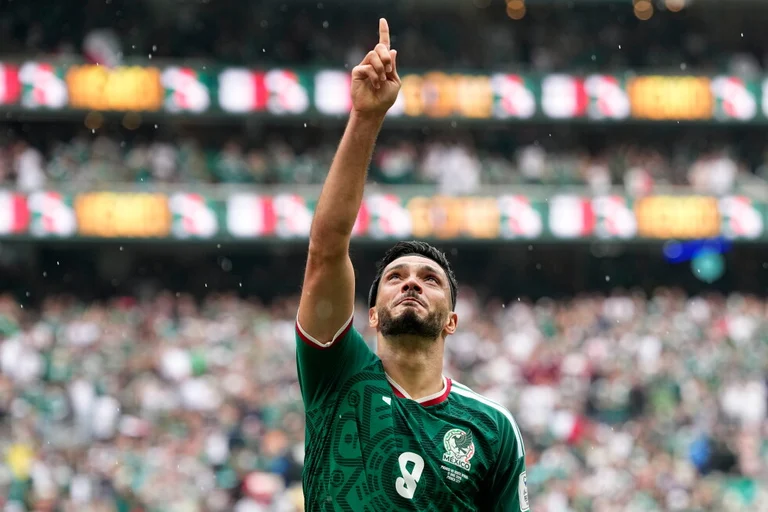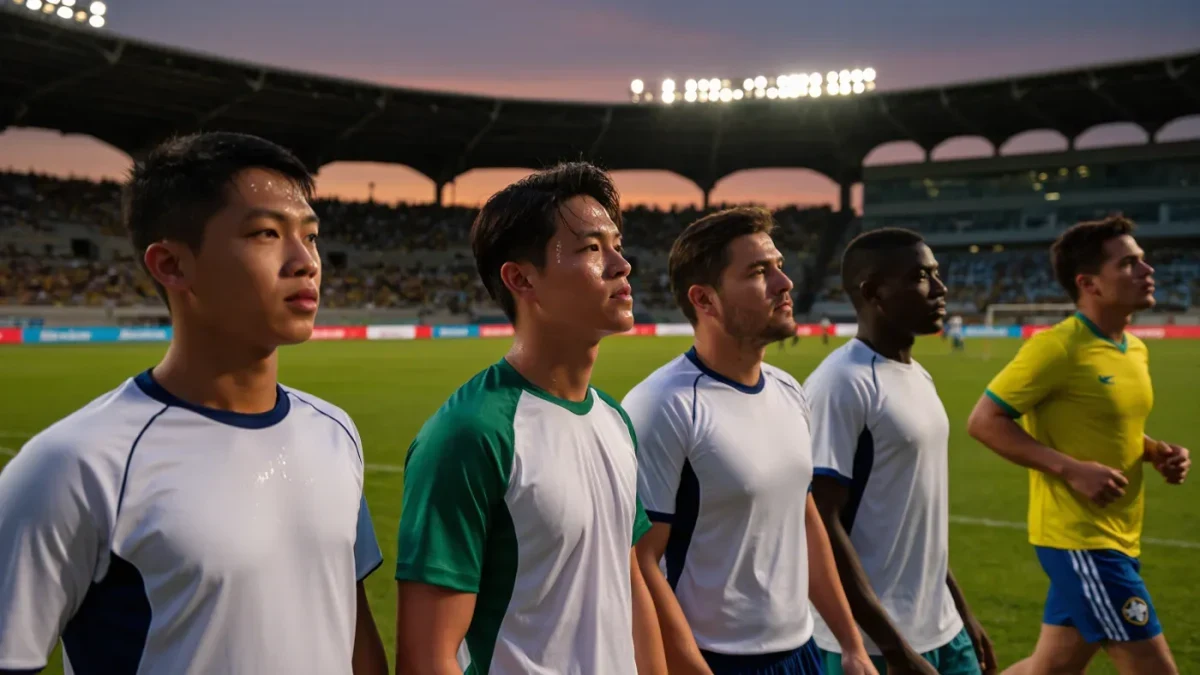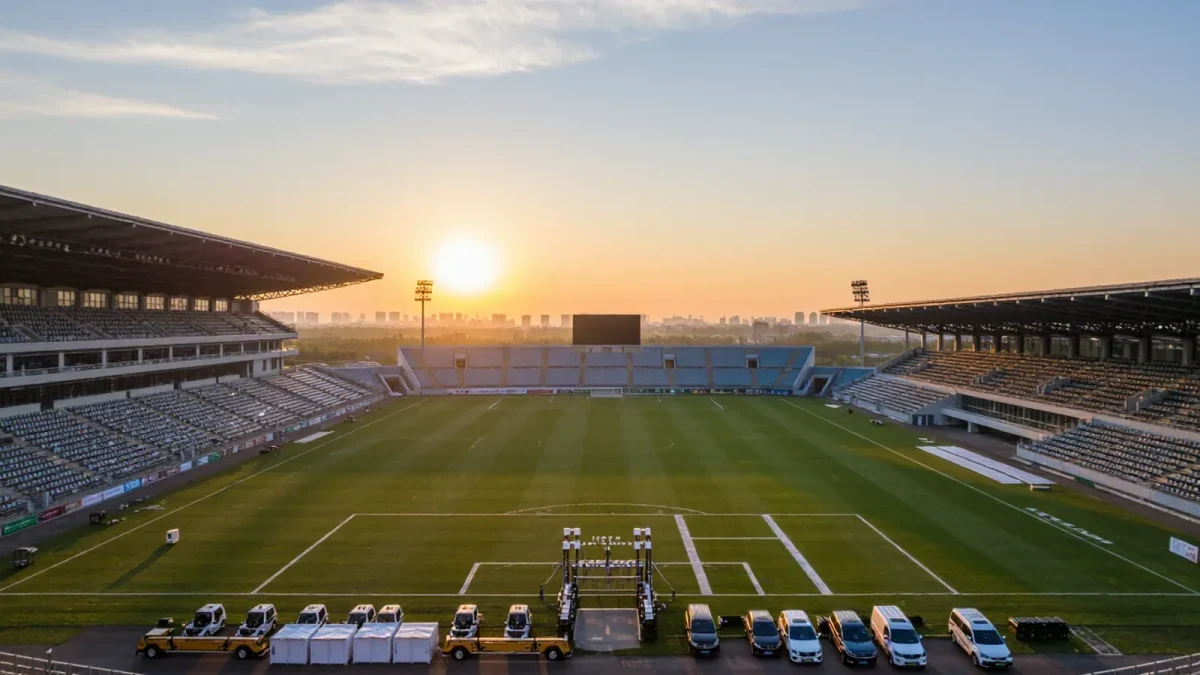
The 2026 World Cup is the largest ever staged, and its scale has organised the entire football summer around it. The tournament, hosted jointly by the United States, Canada and Mexico, is the first World Cup with 48 teams and 104 matches, up from 32 teams and 64 matches in every edition from 1998 through 2022. It runs from 11 June to 19 July 2026 across 16 host cities, with the opening match in Mexico City and the final at MetLife Stadium in the New York area (Reuters, 2025). A longer tournament, more travelling and a knockout round of 32 that did not previously exist have reshaped everything around them: calendar design, squad planning, transfer timing and player rest.
What is structurally new about the format?
Three changes define the competition. First, the group stage: 48 teams in 12 groups of four, with the top two in each group plus the eight best third-placed teams advancing — which means more than half the field survives the groups. Second, an extra knockout round: the round of 32, restoring knockout football for teams that finish third, and pushing the maximum number of matches for the two finalists to eight, one more than in 2022. Third, geography: three host nations spanning four time zones, with group-stage scheduling built around clustered regional travel to limit flights, a planning response to the distances that dwarf any previous World Cup.
How has the calendar been rebuilt around it?
Domestic leagues across Europe compressed their 2025-26 seasons to finish earlier than usual, creating a longer pre-tournament window for national teams. FIFA's international windows were adjusted across the two seasons preceding the tournament, and qualifying — expanded because 16 more teams qualify — ran later into spring 2026, with play-offs and the inter-confederation tournament allocating the final berths in March 2026. For clubs, the compression meant a squeezed season with fixture congestion concentrated in spring, and for national federations it meant training camps, friendlies and medical screening packed into June weeks that in a normal summer would be holidays.
What does hosting across three countries involve?
The logistical footprint is unprecedented. Sixteen host cities — eleven in the United States, three in Mexico and two in Canada — stage matches in stadiums built primarily for American football, several of them with artificial playing surfaces that needed natural-grass solutions for World Cup matches. Teams are based in regional clusters to cut travel, and the match schedule, released by FIFA in early 2025 after a draw held in Washington, was engineered so groups play in geographic proximity. Beyond sport, hosting involves visa processing for players, staff and hundreds of thousands of ticket holders across three immigration systems, security planning coordinated among the three governments, and host-city programmes covering training sites and fan zones. The organisational template draws on the 1994 United States World Cup, still the best-attended in history, extended across a continent.
How have clubs and players planned for it?
The summer has forced a split calendar in squad management. Players at the World Cup face up to eight high-intensity matches with intercontinental travel; players who miss it face a six-week head start on pre-season. Clubs have responded in visible ways:
- Two-track pre-seasons, with separate return dates for tournament players and the rest of the squad, and tailored reconditioning blocks for those returning late.
- Transfer timing. Windows across major leagues opened earlier, and clubs sought to complete core business before the tournament, when scouting targets' values can move with a strong World Cup.
- Load management. Sports-science departments at clubs and federations coordinated playing-time plans for players who arrived at the tournament on the back of compressed domestic seasons.
What does 48 teams mean for who qualifies?
More berths redistributed the qualification map. UEFA received 16 places, the hosts took three automatic slots, and confederations across the board gained entries, with the final spots decided in a play-off tournament featuring six teams held in the host countries during March 2026. For smaller federations, the expansion represented the most realistic path to a first World Cup in decades; for established nations, it added competitive risk in a format where a third-place group finish still advances. The sporting trade-off — a diluted group stage against a genuinely global tournament — has framed every assessment of the format since it was confirmed in 2017.
What happens after the final?
The after-effects will structure next season too. European domestic leagues resume in August with a shortened pre-season for World Cup players, the same asymmetry that followed the 2022 winter World Cup, and clubs will manage returning internationals on individualised plans through the autumn. The 2026 edition also serves as the operational reference point for future expansion debates and for the joint North American hosting model, which FIFA has already used as precedent for its 2030 tournament plan spanning multiple continents. The summer of 2026, in short, has not merely hosted a World Cup; it has bent the sport's calendar, market and logistics around one tournament for two full years.