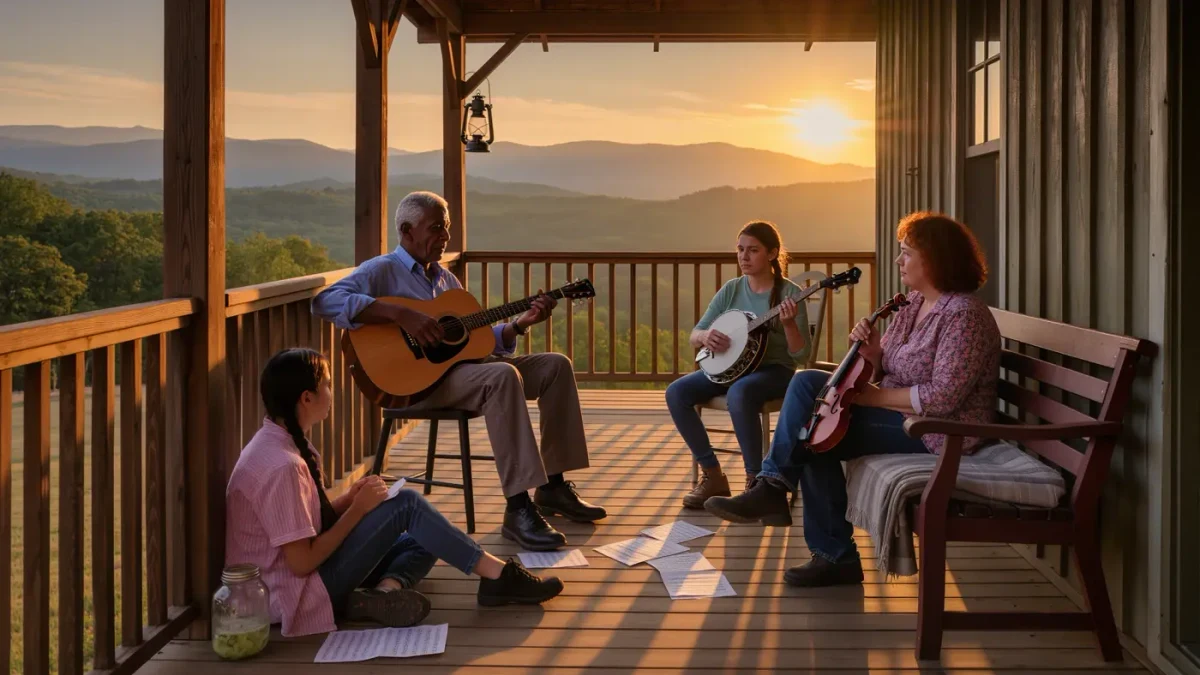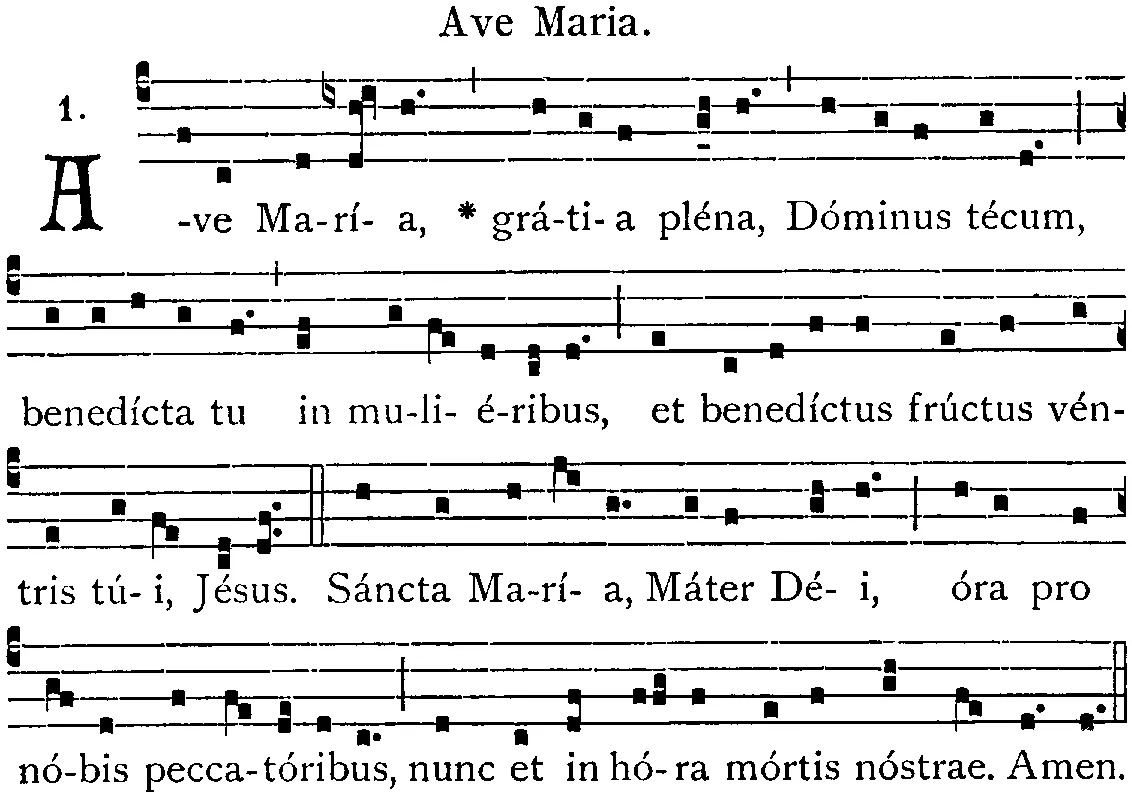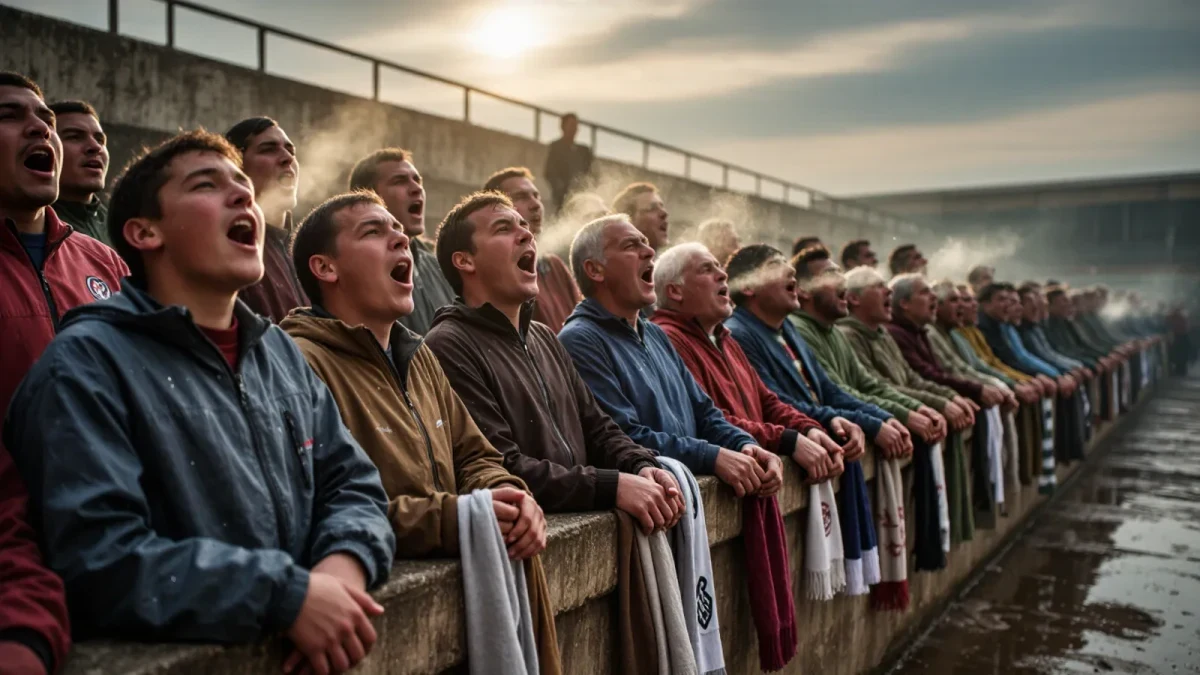
Terrace chants behave like folk music because they are folk music: songs with no composer, no copyright owner and no fixed text, passed by ear until they change. The melody most English fans know as "You'll Never Walk Alone" arrived from a 1945 Rodgers and Hammerstein musical, and the borrowing has never stopped — pop hits, hymns and advertising jingles all get recycled on the terraces every season. Ethnomusicologists who studied oral folk traditions in the nineteenth century documented the same pattern: borrowed tunes, drifting verses, local variants. The stadium simply runs the experiment faster.
What do chants and folk songs actually share?
Both forms survive through repetition rather than notation. A folk ballad travelled from singer to singer, losing verses in one village and gaining them in the next. A chant travels from stand to stand, shortened to fit a two-minute walk to the turnstile, lengthened when a team starts winning. Nobody rehearses. Nobody corrects the text. The version that is easiest to sing wins, which is why so many chants sit in a narrow, comfortable vocal range that a crowd of thousands can hold together without a conductor.
The core shared features are easy to list:
- Borrowed melodies. Almost no chant has an original tune; hymns, music-hall numbers, pop songs and military marches supply the frame.
- Disposable verses. A chant praises a player for one season, then the player leaves and the verse is rewritten for his successor.
- Local mutation.Two grounds a few miles apart sing recognisably different versions of the same song.
- Oral transmission. New fans learn by joining in, not by reading lyrics.
Why do crowds always steal pop melodies?
Because a stolen melody arrives pre-tested. When a crowd adopts a recent chart hit, it is choosing a tune that millions of people already know by heart, which removes the hardest part of teaching ten thousand strangers a song at once. The classic case is the 1996 Spice Girls single "Wannabe," whose chorus was repurposed within weeks of release; before that, Beatles choruses, Gerry and the Pacemakers and even the theme from a television advertisement all made the jump. Folk collectors called this process "tune float" — a melody that floats between songs, absorbing new words. The terrace version is identical, compressed into a single season instead of a generation.
How do verses mutate from stand to stand?
Mutation starts with mishearing. A song that crosses a noisy terrace loses consonants, and fans rebuild the missing words from context, the same mechanism linguists describe in oral poetry. Then comes deliberate localisation: a verse about one striker is edited for another, a city name is swapped, a joke is updated for a recent scandal. Within a year, a chant can exist in a dozen variants, each stable in its own ground and meaningless two hundred miles away. That is precisely how folk ballad scholars map variants of the same song across regions — except the ballad took a century and the chant takes a winter.
A song that crosses a noisy terrace loses consonants, and fans rebuild the missing words from context — the same mechanism found in centuries of oral poetry.
Doesn't the internet freeze chants in place?
Only partially, and the effect is the interesting part. Fan forums and video accounts preserve versions that would once have died out, which acts like a field recording archive: the variant is documented, but the singing tradition keeps mutating anyway. What the internet changed is speed. A chant invented in one country on a Saturday can appear on another continent's terraces within a season, because clips travel faster than travelling fans ever did. Folk-song spread once moved at the speed of migration; chant spread now moves at the speed of upload. The mutation rate did not fall — the distribution radius grew.
Why do some chants last fifty years and others die in a month?
Durability follows folk logic, not musical quality. A chant survives if it is generic enough to outlive its subject, easy enough for a child to learn in one hearing, and attached to something supporters will not stop caring about — the club, the town, an old grievance. Player-specific songs are mayflies. Songs about the club itself become institutions. Compare it to folk scholarship's distinction between broadside ballads, tied to a news event and quickly forgotten, and the older narrative songs that survived because communities kept finding themselves in the story.
The lifespan pattern, roughly
| Type of chant | Typical lifespan | Why |
|---|---|---|
| Player song | One career, often less | Attached to a person who can be sold |
| Manager or board satire | Weeks to a season | Tied to a news cycle |
| Club and town anthem | Decades | Attached to identity, not personnel |
| Derby mockery | Generational | The rivalry renews the audience |
Is anyone actually studying this seriously?
Yes, and the academic framing is blunt: crowd chanting is one of the last mass-participation oral traditions in industrialised countries. Researchers in ethnomusicology and sociolinguistics have treated terraces as living field sites, and journalists have documented the same borrowing chains in popular histories of supporter culture, including long-running BBC coverage of fan songs and their origins. The comparisons hold because both traditions solve the same problem — how does a large, anonymous, constantly replaced population keep a shared repertoire alive without sheet music, rehearsal or authority? Folk communities solved it with float tunes and mutated verses. Football crowds solved it identically, on a Saturday cycle, with a brass band's worth of volume.
What does the folk parallel predict next?
If chants are folk music, the future looks like folk's future: the core repertoire shrinks to the most durable songs, while innovation continues at the edges in smaller, tighter scenes — away ends, ultra groups, kids' sections. Expect more cross-border borrowing as clips circulate, more rapid one-match songs built from whatever is currently on the radio, and a slowly hardening canon of club anthems that nobody remembers writing. That is exactly what happened to folk song when recording arrived. The archive grew, the tradition kept moving, and nobody ever found the original author — because there was not one.
What can other traditions learn from the terrace?
That transmission beats preservation. Institutions spend fortunes archiving songs, dances and dialects, and the archive keeps the artifact while the practice dies. The terrace archives nothing and keeps the practice alive by refusing to stop singing. The lesson sociologists of music keep drawing from supporter culture is that a tradition survives not through recording but through use: a song sung badly by ten thousand people every fortnight is healthier than a perfect recording nobody performs. Folk revival movements have noticed, and some community choirs now learn repertoire the way stands do — by ear, in the room, on repetition — rather than from notation. The method is older than football and, on the evidence of every wet Saturday terrace, considerably more durable than anyone expected a crowd song to be.