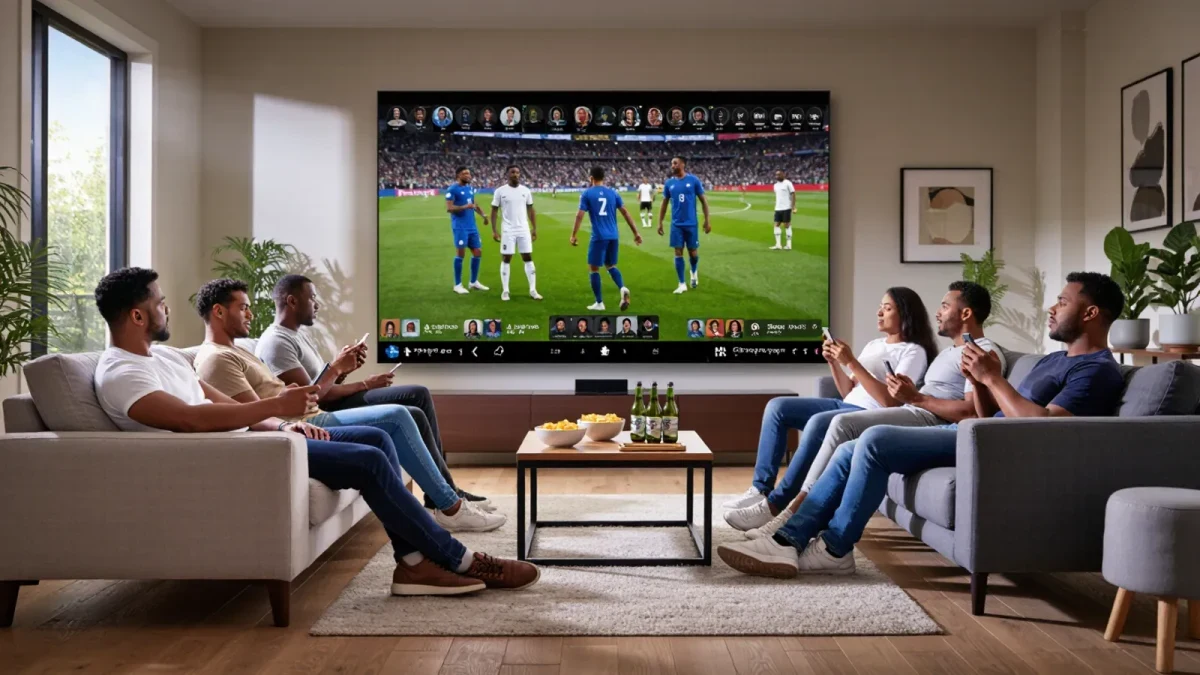
Fan TV money changed broadcast deals because clubs and leagues stopped depending purely on traditional networks and built direct relationships with paying supporters. When the NFL moved its Sunday Ticket out-of-market package to YouTube for the 2023 season, Bloomberg and other outlets reported the arrangement at around $2 billion per year, and that deal became the template every rights holder studied. Once a league can sell directly to fans, it no longer accepts the old middleman discounts.
What is fan TV in this context?
The term covers two things that grew together. The first is direct-to-consumer streaming: subscription services owned by leagues and clubs that carry live matches, archive footage and studio programming. Manchester United's MUTV has operated since 1998, and most large European clubs now run a channel, an app or a full streaming platform. The second is supporter-led media, meaning club-focused fan channels and daily video content that proved there was a large, measurable audience hungry for team-specific programming around the clock. Both developments told rights holders the same thing: attention had fragmented, and the most engaged fans would pay for direct access.
How did streaming platforms change the buyer pool?
For decades, sports rights were auctioned among a handful of terrestrial and satellite broadcasters. Streaming changed the number and type of bidders. Technology companies with subscription businesses entered the market, valuing sport as retention machinery for wider platforms rather than as a standalone advertising product. Amazon began showing Premier League matches in 2019 as part of a UK package that immediately increased competition in a market long dominated by two broadcasters. YouTube's NFL deal, reported by Bloomberg at roughly $2 billion a season from 2023, pushed the logic further: a global platform buying a premium package exclusively for its own subscribers.
More bidders meant higher auction prices, but it also meant shorter deals and more complex carve-outs. Rights holders discovered that streaming buyers want flexibility, global reach and clips rights that traditional broadcasters never demanded, and contracts began to reflect that.
Why do clubs want their own media revenue?
Club-owned channels convert global fandom into recurring income that is not shared through league distribution formulas in the same way as central broadcast money. Media revenue of this kind is attractive for three reasons: it grows with international supporter bases rather than domestic market sizes, it produces first-party data about subscribers, and it gives the club a promotional machine it fully controls. Barcelona, Real Madrid and the largest Premier League clubs have long treated their channels as both a profit centre and a negotiating instrument, because a credible direct platform strengthens their hand when central rights are next auctioned.
- Recurring subscription income independent of domestic rights cycles.
- First-party audience data for sponsorship and marketing.
- A distribution lever in collective bargaining negotiations.
- Archive and documentary content that keeps rights valuable between matches.
How did the money change the deals themselves?
The structure of broadcast contracts shifted in several visible ways. Packages became smaller and more numerous, so different platforms could each buy a slice, as the Premier League did when it split its live rights into sets that let Amazon take a December round. Contracts got shorter, because streaming platforms wanted to reassess value quickly and leagues wanted to keep auction tension high. Carve-outs for highlights, near-live clips and club channel content became explicitly priced lines rather than informal permissions. And geographic exclusivity weakened as global platforms pushed for borderless rights, which collided with the traditional country-by-country sales model.
What is the downside for supporters?
The same fragmentation that raised league revenue raised fan costs. Following one club across competitions increasingly meant stacking subscriptions, because each package sat with a different platform, and the arithmetic that once required one satellite subscription now required several. Leagues responded with their own direct services in markets where no broadcaster met the price, which helped monetise unsold territories but added another product for fans to buy. The tension is now permanent: direct sales maximise rights holder revenue, while supporters bear the friction of reassembling the season across platforms.
| Era | Dominant buyer | Deal shape |
|---|---|---|
| 1990s-2000s | Satellite and terrestrial broadcasters | Long, exclusive, single-market |
| 2010s | Broadcasters plus early streamers | Split packages, pay-TV bundles |
| 2020s | Global platforms and league DTC services | Shorter terms, carved-out clips rights, direct fan products |
Where does the model go next?
The direction of travel is toward hybrid arrangements, where traditional broadcasters keep the mass-audience matches while clubs and leagues expand direct products around the edges: documentaries, shoulder programming, archive access and selected live rights in unsold markets. The Sunday Ticket and Premier League package experiments demonstrated that direct distribution works at scale, and every rights negotiation since has been conducted in that shadow. Fan money did not replace broadcast money; it became a competing bid inside the same auction, which is precisely why the auctions changed.