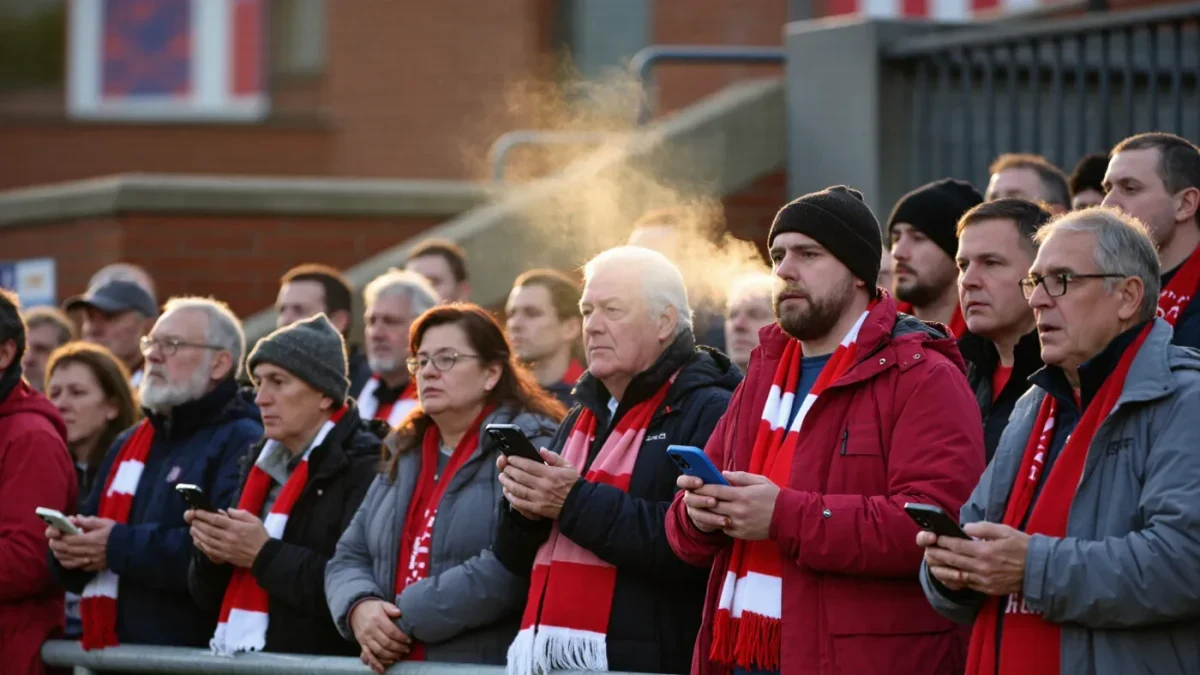
Sports sponsorship rules tightened because regulators stopped taking declared deal values at face value. In April 2023, Premier League clubs voted to remove front-of-shirt sponsorship from a regulated category starting from the 2026-27 season, a decision the BBC reported as a voluntary league-wide measure rather than government imposition. Around the same period, associated-party transaction rules required every sponsorship from a connected company to pass independent market-value benchmarks. Sponsorship income became something football clubs must now prove, not simply declare.
What are related-party transaction rules?
The mechanism addresses a simple loophole. Financial fair play rules measure clubs on revenue, so a club whose owner also controls commercial companies could inflate sponsorship income through deals priced above what an independent buyer would pay. The Premier League introduced associated-party transaction rules in 2021 following the takeover of Newcastle United by a Saudi Arabian-led consortium, and the rules were strengthened in December 2024 after an arbitration challenge by Manchester City. Under the framework, dealings between a club and any entity linked to its ownership must be assessed against fair market value before the income counts toward profitability and sustainability calculations.
How do fair-market-value tests work in practice?
When a club registers a sponsorship with a related party, the league's independent panel benchmarks the deal against comparable transactions: similar asset class, similar club scale, similar market. The process examines what unrelated companies pay for equivalent inventory at equivalent clubs, and the sponsorable value of naming rights, shirt fronts, sleeves and stadium assets is tested separately. If a deal fails the benchmark, the club can keep the sponsor but cannot count the full amount in its regulatory accounts. UEFA runs its own version within club licensing, including rules introduced in 2022 that cap how much sponsorship income from related parties can be recognised within its squad-cost framework.
- Deals with entities connected to ownership are flagged automatically.
- Independent benchmarking compares the deal against market comparables.
- Only the market-value portion counts toward financial rules.
- Arbitration and appeal channels exist for disputed assessments.
What happened with front-of-shirt rules?
The Premier League's 2023 vote made it the first major European league to phase out a whole regulated sponsorship category from shirt fronts on a voluntary basis, with the change taking effect from the 2026-27 season and retaining options such as sleeve and LED-board placements. The league acted ahead of legislation, since the UK government had been consulting on tightening advertising rules in football, and clubs preferred a self-imposed timeline to an imposed one. Other leagues and federations reviewed their own inventory in the following years, and shirt sponsorship categories generally became one of the most scrutinised parts of club commercial strategy across European football.
Why did regulators move beyond gambling categories?
Because market-value abuse was the deeper problem. Category restrictions, including long-standing limits on alcohol and tobacco branding in various markets, governed what may be advertised. Fair-value rules govern what any advertisement may be worth. The distinction matters most for clubs with state-linked or networked ownership, where the boundary between genuine commercial demand and owner support can be invisible from outside. Tightening therefore proceeded on both tracks: content restrictions on sensitive categories, and valuation restrictions on everything else.
| Rule family | What it governs | Body |
|---|---|---|
| Associated-party transactions | Deals with ownership-linked entities | Premier League, from 2021 |
| Fair-market-value assessment | Recognisable sponsorship income | Premier League and UEFA |
| Shirt category restrictions | Which categories may appear on kits | Leagues, various dates |
| Squad-cost ratio | Share of revenue payable to squad costs | UEFA, from 2022 framework |
What do tighter rules mean for clubs commercially?
Compliance has become a discipline in its own right. Clubs now commission independent valuation evidence before signing related-party deals, legal review of sponsorship contracts has lengthened, and commercial departments plan category strategy years ahead of rule deadlines. Smaller clubs face a subtler consequence: benchmarking can lower the regulatory value of deals with local partners whose genuine support exceeds what comparables justify, and clubs must document why their inventory deserves premium pricing. The era in which sponsorship was purely a commercial negotiation between club and brand has ended; every significant deal now has a third party in the room, the regulator.
Is the tightening finished?
The trajectory through the mid-2020s points to continued expansion. The December 2024 Premier League amendments closed loopholes clubs had used around loan arrangements and shareholder financing, and UEFA kept aligning its squad-cost framework with fair-value assessments. Leagues prefer self-regulation to legislation, which means each government consultation tends to produce a new round of voluntary tightening before ministers act. Sponsorship remains one of football's fastest-growing income lines; it is simply income that now arrives with an audit attached.