Two boys train on the same pitch. One was born in January. The other was born in December. In the same age group, the January boy can be almost a year older. That gap changes everything about who gets noticed.
Researchers call this the relative age effect. It is one of the most studied biases in youth sport, and it still shapes academy selection today. Here is how it works, why it survives, and what clubs can do about it.
What the Relative Age Effect Is
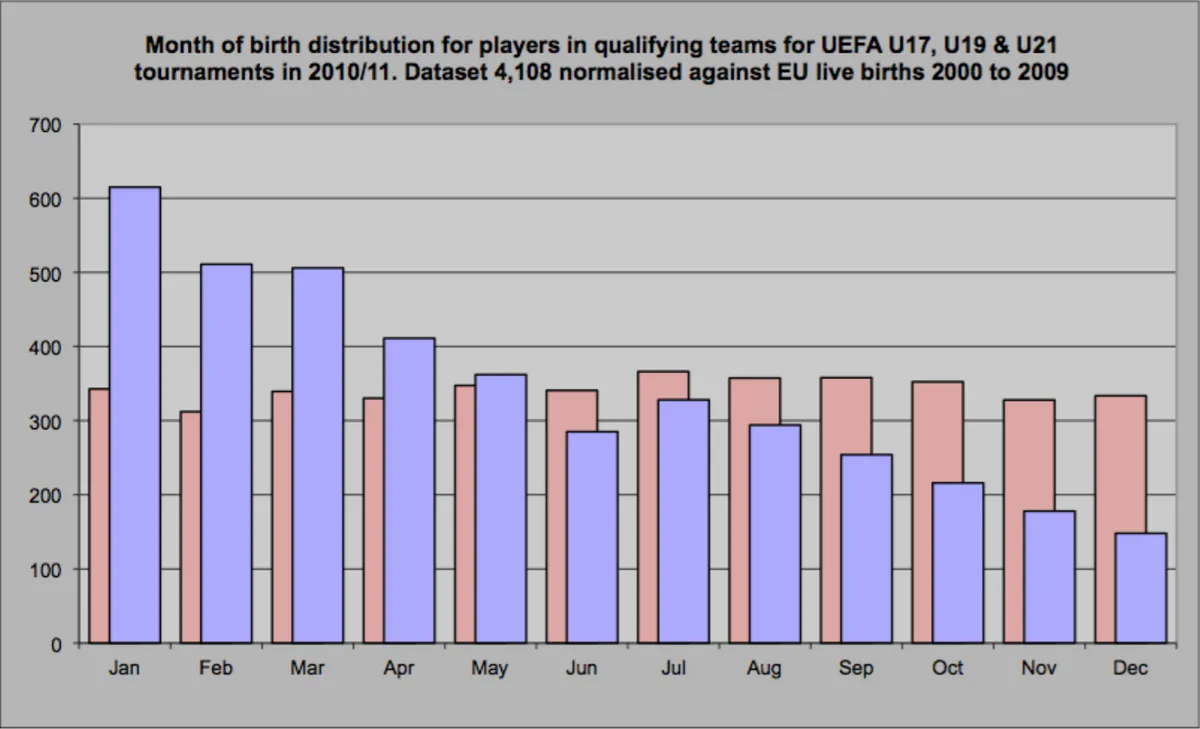
The term describes a bias in youth sport where participation is higher among players born earlier in the selection period than birth rates alone would predict. The selection period is usually the calendar year, the academic year, or the sporting season. In plain words, the oldest children in an age group get picked more often. We covered a connected angle in Why B-tech players need game time more than another drill.
The effect is well documented in association football, along with many other sports. Squads for youth tournaments show the same pattern again and again. Players born near the start of the selection year appear far more often than those born near the end.
Why the Cut-Off Date Matters
Youth sport is organized into annual age groups. Football's world body and the international confederations use 1 January as their administrative cut-off date. Some places use other dates, such as 1 September in the UK. Whatever the date, it draws a line, and children born just after it are the oldest in their group.
A few extra months of age can mean a real physical edge. Differences in maturity feed the effect. Older children in a group are often taller, stronger, and more settled. Coaches see that edge and read it as talent, even though part of it is simply time. For related coverage, see Why Doc Rivers calling time on coaching matters for career transitions.
How the Bias Builds Over a Career
The effect feeds itself. Early-selected players get better coaching, stronger teammates, and bigger challenges. Older individuals also gain more competence and self-efficacy, which widens the performance gap even further. Children born late in the selection year face the opposite path. Many drift away before their bodies catch up.
The risk is not equal everywhere. Research points to the highest risk in popular sports, at regional and national level, and in the mid to late adolescent years. Casual, local football shows the least of the bias. In short, the sharper the selection, the stronger the effect.
What Clubs Can Do About It
There is no perfect fix, but there are tested options. Suggested measures include moving cut-off dates, widening age group ranges, setting birthdate quotas, using an average team age for eligibility, or grouping players by height and weight instead of age. Some of these struggle, because the effect simply moves with whatever selection dates are chosen.
One cheap fix stands out. Making the relative age known to the people in the environment has shown less bias in talent identification. When coaches know a small player is young for the group, they judge the player rather than the birthday. Awareness costs nothing, and it works.
Conclusion: Talent Is Not a Birth Month
The relative age effect is not a conspiracy. It is a side effect of a system that needs age groups to work. But it costs the game many late developers who never get a fair look. Clubs that understand the bias, and design selection around it, find players the calendar hides. That is the real prize of taking this effect seriously.